inventory:8,580
TI
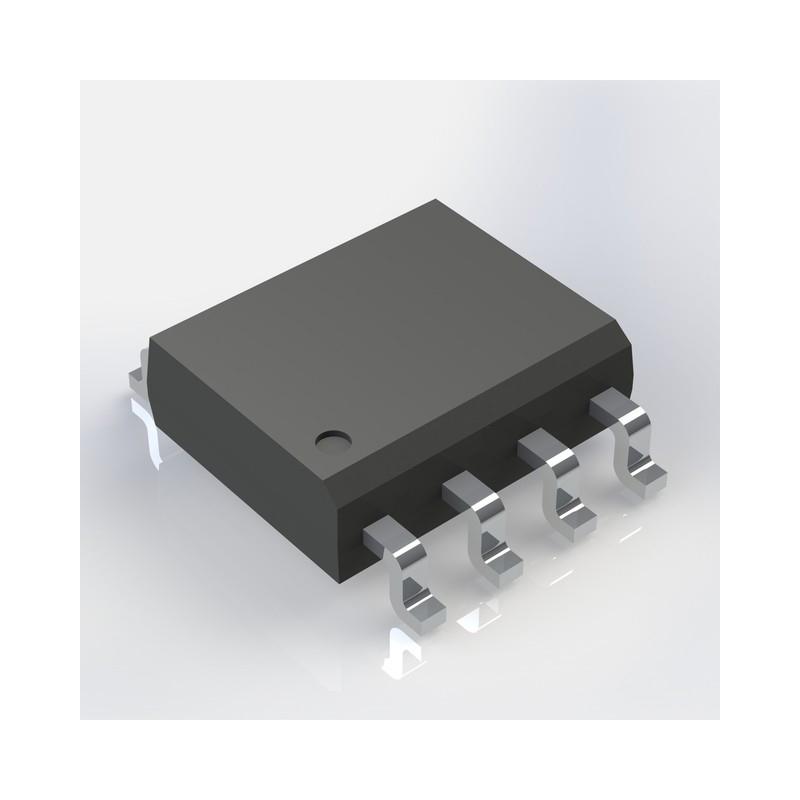
SOIC (D)-8
We are here to provide you with the electronic components you need!
Secure Code for Password Recovery via Email Request.
Please use the security code from your email to reset your password.
Please proceed to log in or return to the homepage.
A Variable Frequency Drive (VFD) is a power regulation device used to drive electric motors by controlling their speed through adjusting the supply frequency. The basic working principle involves converting the input AC power into DC, and then using an inverter to convert the DC power into AC with an adjustable frequency. This allows precise control of the motor's speed. VFDs are composed of a rectifier, filter, inverter, and control sections. They are widely used in industries, agriculture, households, and large home appliances.
Active VFDs refer to drives that use active components such as transistors and field-effect transistors (FETs) to drive the motor load. These active components can actively control the direction and magnitude of the current, enabling precise control of motor speed and operation.
Active VFDs control the motor's speed and operation by adjusting both the frequency and voltage of the power supply. First, the input AC power is converted into DC through a rectifier circuit. Then, a filter circuit smooths the DC power to reduce ripples. The inverter circuit converts the DC power into AC with a controllable frequency, and through control algorithms, it adjusts the output frequency and voltage to achieve precise motor speed control.
Active VFDs, due to their high control precision, fast response, and rich functionality, are widely used in fields such as industrial production, agriculture, and large household appliances. For example, in industrial automation, active VFDs can precisely control the speed and torque of production equipment, improving both efficiency and product quality. In agriculture, they can be used to control irrigation systems and pumps, achieving water and energy conservation. Active VFDs also play an important role in energy-saving and control in large appliances such as air conditioners and refrigerators.
Passive VFDs, on the other hand, use passive components such as inductors and capacitors to drive motor loads. These components do not consume power themselves but influence the waveform and phase of current and voltage by changing circuit parameters, thus controlling the motor’s speed and operation.
Passive VFDs control motor speed and operation by altering the parameters of inductors and capacitors within the circuit. By utilizing the energy storage and release characteristics of inductors and capacitors, they generate specific voltage and current waveforms. The magnetic fields and torque produced in the motor vary with changes in these parameters, enabling speed regulation. However, due to the simpler control mechanisms of passive components, passive VFDs offer limited control precision.
Passive VFDs are mainly suited for small appliances and equipment with lower control precision requirements and cost sensitivity. For example, they can be used in small fans and pumps to achieve basic speed control. Additionally, they are used in household appliances like washing machines and blenders to enhance energy savings and speed control. However, due to their limited precision and functionality, passive VFDs are rarely used in high-end or industrial applications.
In summary, both active and passive VFDs have unique application scenarios and advantages. Active VFDs, with their high control precision and extensive functionality, are vital in high-end and industrial applications. Passive VFDs, with their low cost and simple control methods, are valuable in smaller household appliances and equipment. The choice of VFD depends on the specific application and requirements to maximize efficiency.
250kbps full duplex RS232 transceiver TSSOP16 interface IC
4V 2-Pin SOD-323 T/R ESD Suppressor Diode TVS Bi-Directional
This programmable EPROM is a reliable and cost-effective memory solution for various applications
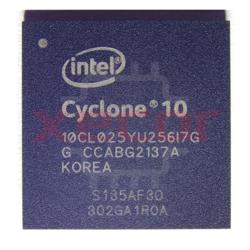
256UBGA IC FPGA with 150 I/o
Power Sequencer LM3881MM/NOPB: Supervisory Circuits
Rectangular 6 pin surface mount device for temperature sensing
NOR Flash EW-SERIES FLASH NOR SLC 8MX16 TSOP Parallel NOR Flash Embedded Memory MT28EW128ABA
FLASH NOR Memory IC 32Mbit Parallel
As 2026 approaches, the automotive industry is undergoing a profound integration of electrification, intelligence, and connectivity.
As an expert in electronic components, Xecor is committed to providing the necessary components and technical support.
In the fast-evolving landscape of the electronics manufacturing industry, innovation in critical process technologies is constantly emerging.