inventory:8,580
TI
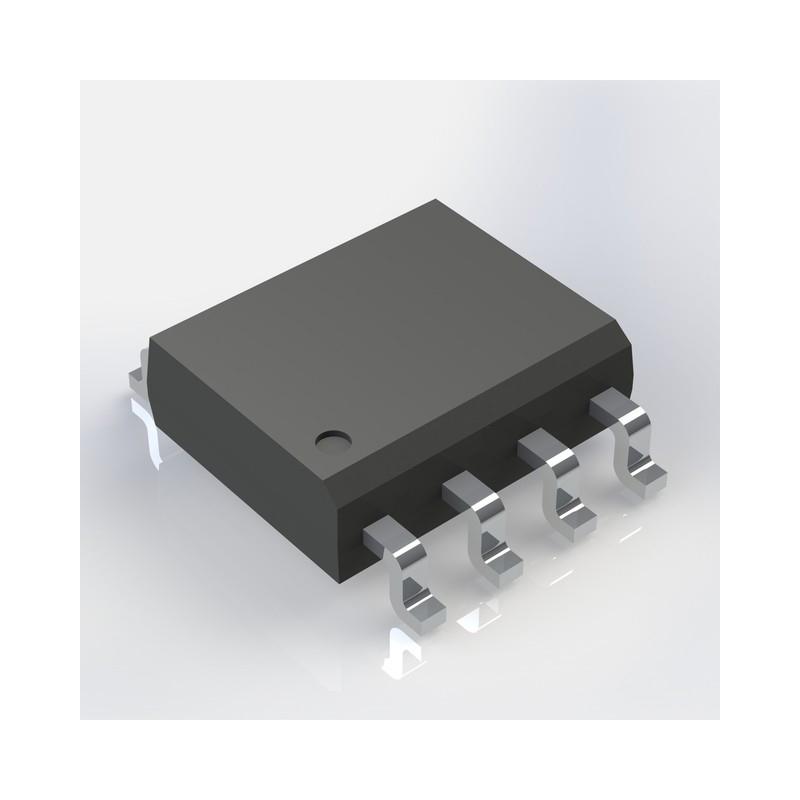
SOIC (D)-8
We are here to provide you with the electronic components you need!
Secure Code for Password Recovery via Email Request.
Please use the security code from your email to reset your password.
Please proceed to log in or return to the homepage.
In the fast-evolving landscape of the electronics manufacturing industry, innovation in critical process technologies is constantly emerging. However, wave soldering technology remains indispensable in the electronics assembly process, especially in the production of through-hole circuits and mixed assembly circuits. Originating in the mid-20th century in the UK, wave soldering has undergone continuous evolution over time and has become a key technology for replacing manual soldering, achieving efficient automated production, and marking a significant revolution in the electronics industry.
However, during actual production, defects such as insufficient fill, bridging, and cold soldering in the wave soldering process still persist. These problems are often closely related to factors such as design, material selection, and process control. As circuit board layouts become denser, pin spacing for through-hole components shrinks, and lead-free soldering processes become more prevalent, bridging issues in wave soldering are particularly pronounced, making them a pressing problem in the process. With advancements in laser technology, laser soldering has become a key technique for improving soldering quality, efficiency, and reliability. This technology not only addresses the challenges of lead-free soldering but also meets the growing demand for precision soldering in the electronics industry.
Wave soldering involves using an electric or electromagnetic pump to form a molten solder wave, through which a printed circuit board (PCB) pre-loaded with components passes at a specific angle, creating mechanical and electrical connections between the component leads or solder terminals and the PCB. When the PCB passes through the solder wave, its component leads may be bridged by liquid solder, forming a connection. The formation of this bridging is primarily due to the pressure difference in the separation zone as the PCB exits the solder wave.
(1) Pad Spacing: The spacing between pads is one of the key factors influencing wave soldering quality. By altering the curvature radius of the liquid solder between adjacent pads, pad spacing affects the additional internal pressure and, consequently, the likelihood of bridging. The smaller the pad spacing, the smaller the curvature radius, and the greater the additional internal pressure between adjacent pads. This increases the flow of liquid solder into the bridging area, making bridging more likely as the PCB exits the solder wave. When pad spacing is less than 0.6mm, the probability of wave soldering bridging increases significantly.
(2) Lead Protrusion Length: The length of lead protrusion is another important factor influencing wave soldering quality. Excessively long lead protrusions reduce the curvature radius of the liquid solder between pads, increasing additional internal pressure and making bridging more likely. Additionally, the shadowing effect of front leads can lengthen the separation zone as the PCB exits, pulling the subsequent solder joints and leads into the separation zone, creating conditions conducive to bridging.
(3) Orientation of Close-Pitch Components: With the increasing complexity and integration of electronic products, component pin spacing is becoming tighter, reducing pad spacing. When the orientation of close-pitch components is perpendicular to the wave soldering direction, bridging is exacerbated. This occurs because multiple pins of closely spaced components simultaneously contact the solder wave, disturbing the solder and affecting the solder’s separation. Moreover, the "aggregation effect" of multi-pin soldering increases the difficulty of separation.
Laser soldering is an advanced non-contact heating process that uses a high-energy-density laser beam as a heat source. By precisely controlling laser parameters, the solder is rapidly melted, allowing for efficient soldering. Key components of the laser soldering system include the laser generator, a high-precision automatic solder ball feeding and dispensing mechanism, and a control system, all of which ensure a highly automated and precise soldering process.
(1) Consistent Solder Quantity: Ensures uniformity and repeatability in the soldering process.
(2) High Precision: Laser control allows for soldering precision at the micron level, suitable for high-precision electronic components.
(3) Fast Soldering Speed: The rapid heating and melting by pulsed lasers, coupled with the injection of inert gas, significantly shortens the soldering cycle.
(4) Non-contact: Prevents mechanical stress or damage to sensitive components, as seen in traditional soldering.
(5) Minimal Heat-Affected Zone: The focused nature of laser soldering limits the heat-affected zone to a very small area, reducing thermal damage to other components or sensitive parts on the PCB.
Despite the significant advantages of laser soldering, practical applications face challenges such as high equipment costs and operational complexity. To overcome these, DaYan Manufacturing offers comprehensive customer services and technical support, ensuring clients can fully leverage the potential of laser soldering technology.
(1) Cost-effectiveness: Through independent innovation and optimized designs, DaYan Manufacturing effectively reduces the procurement, operation, and maintenance costs of laser soldering equipment, significantly lowering production costs and increasing product competitiveness.
(2) Customized Solutions: Offers tailored laser soldering solutions, designed to meet specific customer applications and ensure a perfect match between soldering technology and customer needs.
(3) Professional Technical Support: A team of welding experts provides comprehensive technical support and services, ensuring that customers can fully utilize the potential of laser soldering technology.
As the demand for higher soldering quality in the electronics manufacturing industry continues to rise, laser soldering is rapidly becoming the preferred technology in electronics assembly due to its efficiency, precision, and reliability. With extensive technical expertise and experience in the field of precision welding for intelligent manufacturing, DaYan Manufacturing is committed to providing the best laser soldering solutions to its customers. We look forward to working with more clients to promote innovation in the electronics manufacturing industry and embrace a new era of intelligent manufacturing.
This article is written by DaYan Manufacturing, a leader in providing the latest technology insights and in-depth analysis in the field of precision welding for intelligent manufacturing. DaYan Manufacturing is a laser soldering technology manufacturer with over 20 years of industry experience, specializing in R&D, production, sales, and service. For more information on the application of laser soldering machines in precision welding for intelligent manufacturing, or for specific technical requirements, please contact us through the DaYan Manufacturing website. We welcome you to visit our company, test machines, and get free samples.
250kbps full duplex RS232 transceiver TSSOP16 interface IC
4V 2-Pin SOD-323 T/R ESD Suppressor Diode TVS Bi-Directional
This programmable EPROM is a reliable and cost-effective memory solution for various applications
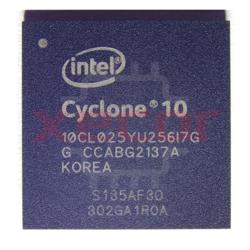
256UBGA IC FPGA with 150 I/o
Power Sequencer LM3881MM/NOPB: Supervisory Circuits
Rectangular 6 pin surface mount device for temperature sensing
NOR Flash EW-SERIES FLASH NOR SLC 8MX16 TSOP Parallel NOR Flash Embedded Memory MT28EW128ABA
FLASH NOR Memory IC 32Mbit Parallel
As 2026 approaches, the automotive industry is undergoing a profound integration of electrification, intelligence, and connectivity.
As an expert in electronic components, Xecor is committed to providing the necessary components and technical support.
In the fast-evolving landscape of the electronics manufacturing industry, innovation in critical process technologies is constantly emerging.