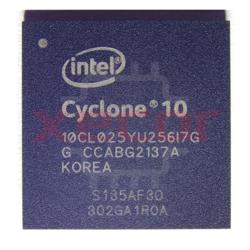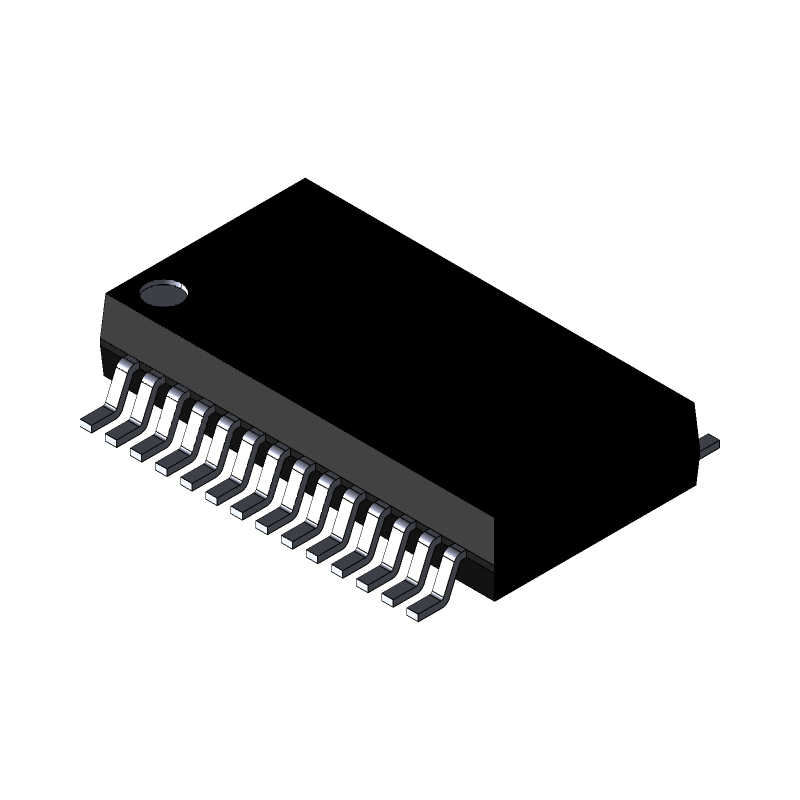
inventory:5,527
International Rectifier
SSOP-28
We are here to provide you with the electronic components you need!
Secure Code for Password Recovery via Email Request.
Please use the security code from your email to reset your password.
Please proceed to log in or return to the homepage.
With the rapid development of the automotive sector, vehicles are being redefined. In the design of automotive electronic and electrical systems, considerations of functional safety and reliability are indispensable. Properly understanding the relationship between the two helps in better analyzing and solving problems.

Automotive reliability refers to the ability of a vehicle to perform its specified functions under specified conditions and for a specified period. It is a complex performance metric, broadly encompassing fault-free performance (durability), maintainability, and storability. Fault-free performance is a critical aspect, with key evaluation metrics including fault-free probability (reliability), cumulative fault probability, and fault rate. Durability is assessed through a range of life metrics, such as average life (or average fault-free operating mileage or time), rated life, characteristic life, reliable life, and effective life. Maintainability is evaluated not only through maintainability, maintenance rate, and average maintenance time but also through a series of indicators that show how easy it is to maintain the vehicle and diagnose, disassemble, and repair faults, such as maintenance intervals, maintenance workload, and maintenance costs (cost per 1000 km).
With the rapid adoption of smart and electric technologies in automobiles, the number of in-car controllers and various electronic components is increasing. Each of these electronic components is at risk of systematic and random hardware failures, making automotive functional safety increasingly important. In the automotive electronics industry, the international standard for functional safety, ISO 26262 (based on IEC 61508, the generic standard for functional safety of electrical/electronic systems, and applicable to the automotive industry), and the corresponding national standard GB/T 34590 define functional safety as: avoiding unreasonable risks caused by failures of electronic and electrical systems. This means that random hardware failures and systematic failures should not lead to unsafe system behaviors that could result in injury or death. ISO 26262 is the first functional safety standard specifically for road vehicles.
Focus: Functional safety emphasizes risk control, while reliability focuses on extending product lifespan.
Purpose: Reliability design aims to maintain system functionality, ensuring the product can operate fault-free for a long period. Functional safety design aims to prevent accidents, avoiding personal injury and property loss.
Design Methods: Common reliability design methods include derating, redundancy, tolerance, simplification, thermal design, and electromagnetic compatibility (EMC) design. Functional safety revolves around designing safety mechanisms, including redundancy, diagnostics, alarms, and transitioning to a safe state.
Reliability design addresses system states before and up to the point of failure, aiming to reduce the probability of failure. Functional safety design deals with system states post-failure, aiming to prevent injuries, through fault diagnosis and response (transitioning to a safe state or entering emergency operation).
Analysis Methods: While both reliability and functional safety analyses use fault tree analysis (FTA), they focus on different aspects. Functional safety emphasizes risk and hazard analysis, whereas reliability focuses on functional failure analysis.
Validation Methods: Methods used for reliability design validation are also applicable to functional safety validation. However, some functional safety validation methods, such as fault injection testing, are not used in reliability design validation.
Management Methods: Functional safety design requires more stringent management, employing additional management processes like safety requirements management, safety analysis, and safety design, which are not used in reliability design. Conversely, reliability design management methods are applicable to functional safety design.
Metrics and Evaluation Methods: Common functional safety metrics include single-point fault metrics (SPFM), latent fault metrics (LFM), and the probability of random hardware failure against safety goals (PMHF).
Common reliability metrics include reliability R(t), failure rate (fault rate) λ(t), mean time between failures (MTBF), and reliable life.
The differences in metrics lead to different evaluation methods. High functional safety does not necessarily mean high reliability, and high reliability does not guarantee good functional safety. A product with high functional safety might have reduced reliability, and a highly reliable product might lack good functional safety if safety mechanisms are not considered in the design.
Reliability as a Foundation: Functional safety considerations are meaningful only if the product is reliable. An unreliable product cannot have functional safety.
"Fault" is the common root for both reliability and functional safety. In preventing faults, the goals of reliability and functional safety align. Given a fixed safety mechanism, higher reliability also enhances functional safety. In general, system unreliability leads to system unsafety, such as in the case of an electronic power steering system (EPS) failure, which affects normal driving operations and could result in accidents.
Common Theoretical Foundations: The theoretical foundations of reliability engineering, such as probability theory, statistical analysis, common distribution functions, failure rates and distributions, the bathtub curve, common reliability models, and failure rate predictions, are also applicable to functional safety design.
Common Design Methods: Since reliability is the foundation of functional safety design, reliability design methods are also used in functional safety design. For example, redundancy design is a common method in both reliability and functional safety design.
Common Analysis Methods: Analysis methods and tools like FMEA and FTA are used in both reliability and functional safety design analyses.
Common Validation Methods: Testing methods related to reliability, such as climate, electromagnetic, and mechanical environment tests, are also applicable to functional safety testing. Validation methods like reviews and simulations apply to both functional safety and reliability designs. However, some methods used for functional safety testing, like fault injection testing, are not suitable for reliability testing.
Common Development Tools: Popular reliability design tools in the market, such as Isograph and Medimianalyze, are also applicable to functional safety development.
Similar Management Requirements: Both functional safety and reliability have technical and management requirements, with similar management processes. The management requirements of reliability design are also applicable to functional safety design. The many links between functional safety and reliability arise because "fault" is their common foundation. All theories on fault analysis and handling apply to both functional safety and reliability. Their differences lie in their focus: functional safety emphasizes risk control, while reliability emphasizes extending lifespan.
2V and is housed in a 144-pin TQFP package
250kbps full duplex RS232 transceiver TSSOP16 interface IC
4V 2-Pin SOD-323 T/R ESD Suppressor Diode TVS Bi-Directional
This programmable EPROM is a reliable and cost-effective memory solution for various applications
256UBGA IC FPGA with 150 I/o
Power Sequencer LM3881MM/NOPB: Supervisory Circuits
Rectangular 6 pin surface mount device for temperature sensing
NOR Flash EW-SERIES FLASH NOR SLC 8MX16 TSOP Parallel NOR Flash Embedded Memory MT28EW128ABA
As 2026 approaches, the automotive industry is undergoing a profound integration of electrification, intelligence, and connectivity.
As an expert in electronic components, Xecor is committed to providing the necessary components and technical support.
In the fast-evolving landscape of the electronics manufacturing industry, innovation in critical process technologies is constantly emerging.