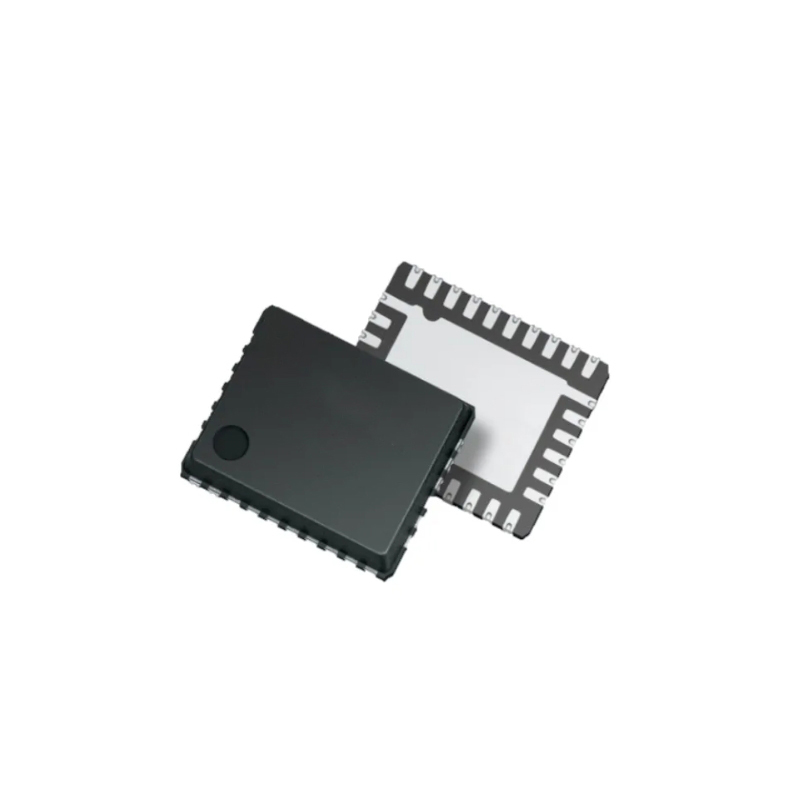
inventory:5,429
Cree Led
PLCC-4
We are here to provide you with the electronic components you need!
Secure Code for Password Recovery via Email Request.
Please use the security code from your email to reset your password.
Please proceed to log in or return to the homepage.
As 2026 approaches, the automotive industry is undergoing a profound integration of electrification, intelligence, and connectivity. Automotive electronics technology has become the core driving force behind this transformation. According to industry data, electronic components now account for over 50% of the cost of modern vehicles, especially in new energy vehicles and intelligent connected vehicles. Cars are no longer simple mechanical means of transportation, but rather mobile intelligent terminals integrating computing, communication, sensing, and control.

As experts in the field of electronic components, platforms like Xecor are dedicated to providing high-quality automotive-grade components and technical support to help manufacturers address the challenges brought about by intelligence and electric drive. From OTA remote upgrades to domain controller architectures, from bus data logging to functional safety design, automotive electronic solutions are comprehensively reshaping the development, manufacturing, and user experience of vehicles. This article will delve into the key areas and technological trends of automotive electronics based on current cutting-edge technologies.
2. OTA Over-the-Air Update Technology: A Symbol of Automotive Intelligence and Automated Testing Solutions
OTA (Over-The-Air) technology is a key feature of smart cars, allowing vehicles to remotely receive software updates via wireless networks, continuously bringing new features to users and improving the driving experience without requiring visits to a service center.

OTA involves more than just simple patch delivery; it also includes differential upgrades, rollback mechanisms, and secure encryption. By 2026, almost all newly launched smart electric vehicles will support full-vehicle OTA, including powertrain, infotainment systems, and driver assistance functions.
However, the complexity of OTA presents testing challenges. Automotive OTA automated testing solutions ensure the safety and reliability of the upgrade process by simulating real-world network environments, automating script execution, and injecting faults. Testing tools such as the Vector Test System (VT System) combined with analysis software like CANoe enable bus simulation and real-time monitoring, helping engineers verify the vehicle's behavior after the upgrade.
Effective OTA testing strategies not only shorten development cycles but also reduce recall risks, becoming a core competitive advantage for automotive manufacturers.
3. Vehicle Bus Data Logging and ECU Automated Testing: A Powerful Tool for Fault Diagnosis
Modern automotive internal communication relies on CAN (Controller Area Network) and LIN (Local Interconnect Network) buses. The CAN bus is suitable for high-real-time scenarios, such as powertrain and chassis control; the LIN bus is used for low-cost body control, such as windows and lights.
Vehicle bus data logger solutions help engineers perform fault diagnosis, performance analysis, and data playback by recording CAN/LIN bus data. This is crucial for understanding the interaction of complex electronic control systems, especially during development and after-sales stages.
At the same time, ECU automated testing solutions based on the VT system provide a complete testing process, including hardware-in-the-loop (HIL) simulation, bus simulation, and automated execution. These tools significantly improve testing efficiency and ensure the stability of ECUs under extreme conditions.
4. SoC Chip Interface IP Challenges and Electric Drive Technology
Automotive electronic SoC (System on Chip) chips are becoming increasingly integrated, requiring support for 5G communication, AI computing, and high-bandwidth data transmission. The design of interface IPs (such as PCIe, Ethernet, and SerDes) faces challenges in power consumption, latency, and compatibility.
Solutions include adopting advanced process nodes, optimizing IP core design, and multi-standard compatibility. By 2026, automotive SoCs will be widely used in advanced ADAS and intelligent cockpits. In the field of electric drive, variable frequency drives (VFDs) are central to electric vehicle motor control. Active Front End VFDs enable bidirectional energy flow through active rectification, supporting regenerative braking; passive VFDs are simpler and suitable for cost-sensitive applications. Choosing the right type directly impacts vehicle efficiency and performance.
5. Internet of Things and Smart Parking: Extended Applications of Automotive Electronics
Automotive electronics extend beyond the vehicle itself to the external ecosystem. 4G/5G industrial routers combined with IoT technology enable remote monitoring and management of smart parking lots. The system uses geomagnetic sensors, cameras, and a cloud platform to monitor parking space occupancy in real time, supporting mobile payments and navigation guidance.
This not only alleviates urban parking difficulties but also provides a data foundation for connected vehicles, and will be deeply integrated with V2X (vehicle-to-everything communication) in the future.
6. Functional Safety and Reliability: The Bottom Line for Automotive Electronics
With the increasing intelligence of automobiles, functional safety has become paramount. The ISO 26262 standard defines different safety levels from ASIL A to ASIL D, requiring systems to maintain a safe state in the event of a failure.
Functional safety and reliability are closely related: reliability focuses on long-term fault-free operation, while functional safety emphasizes risk control. Design methods such as redundancy, diagnostic coverage, and FMEA (Failure Mode and Effects Analysis) are necessary.
By 2026, all new vehicle electronic systems must strictly comply with functional safety specifications, which is also a prerequisite for type approval.

Automotive electronics technology in 2026 is driving the industry towards a smarter and greener direction. From central computing architecture to OTA upgrades, from electric drive control to functional safety, every technology relies on reliable electronic components. Platforms like Xecor provide developers with a complete ecosystem from chips to systems.
In the future, with the maturation of 6G, large AI models, and solid-state batteries, automotive electronics will usher in even greater breakthroughs. Automotive manufacturers and supply chain companies need to keep pace with trends and continuously innovate to gain an advantage in this revolution.
The TPS561208DDCR boasts a wide input voltage range and delivers a stable 2A output, making it ideal for various electronic systems
This product, labeled IRLML6402TRPBF, is an SMD MOSFET produced by INFINEON
V-Ref Precision 1.25V 25mA 3-Pin SOT-23 T/R
High input impedance
Cortex-M4F processor
Switching Controllers 75V COT PFET BUCK SWITCHING CONTROLLER
Op Amp Single High Output Current Amplifier ±30V/60V 7-Pin(7+Tab) TO-220 Tube
CPLD MAX? II Family 440 Macro Cells 201.1MHz 0.18um Technology 2.5V/3.3V 100-Pin TQFP Tray
As 2026 approaches, the automotive industry is undergoing a profound integration of electrification, intelligence, and connectivity.
As an expert in electronic components, Xecor is committed to providing the necessary components and technical support.
In the fast-evolving landscape of the electronics manufacturing industry, innovation in critical process technologies is constantly emerging.