inventory:5,527
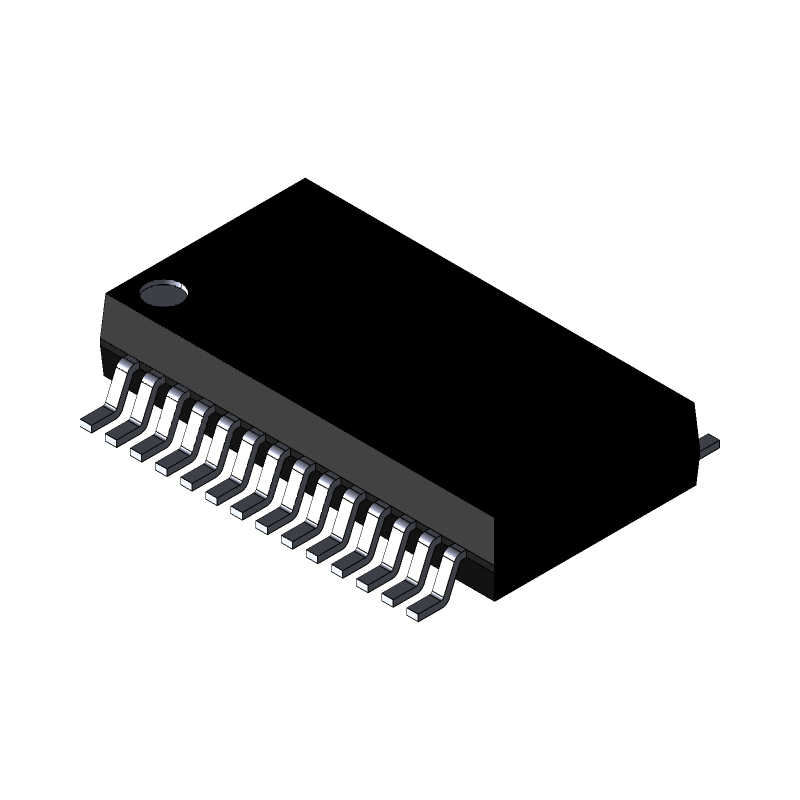
International Rectifier
SSOP-28
We are here to provide you with the electronic components you need!
Secure Code for Password Recovery via Email Request.
Please use the security code from your email to reset your password.
Please proceed to log in or return to the homepage.
Machine vision is widely used in industrial fields, covering numerous application scenarios. In manufacturing, tasks executed using machine vision include final inspection of subcomponents and checking parts for potential manufacturing defects. In automation, machine vision plays a crucial role in guiding robots. It is also used to verify data matrix codes, inspect food packaging, and read barcodes. This white paper on machine vision will provide a comprehensive overview of machine vision systems and their market. This article is the first part, focusing on system applications, market trends, and system implementation.
Machine vision uses cameras to collect visual data from the environment, which is then processed by a combination of hardware and software, transforming the data into formats suitable for various applications. Machine vision technology often employs specialized optical components to capture images for processing, analyzing, and quantifying specific aspects of the images.
These applications can examine specific characteristics of parts being produced on a production line, such as assessing whether the parts meet product quality standards, and if not, the parts may be discarded. Machine vision systems use digital sensors located within industrial cameras equipped with specialized optics and are protected. Once the sensors capture the images, the computer hardware and software process, analyze, and measure different attributes of the images to assist in decision-making.
Beyond quality control in manufacturing, machine vision systems have numerous other applications. For example, they can be used in traffic management systems to monitor and control traffic flow, enhancing road safety and efficiency. In the medical field, machine vision can support the diagnostic process by providing precise image analysis to detect diseases early. In agriculture, machine vision systems can monitor crop health and automate harvesting processes.
Additionally, in the retail industry, machine vision can facilitate the application of automated checkout systems, improving customer experience and operational efficiency. Thus, machine vision systems are powerful and widely applicable, becoming an indispensable part of modern technology.
Machine vision systems can inspect a wide range of products, including food, beverages, pharmaceuticals, and electronics. These systems utilize various machine vision technologies, such as image recognition, optical character recognition (OCR), and object detection, to identify defects and classify them. They can also measure the size and shape of objects or track and trace products throughout the production process. Machine vision systems help improve product quality, reduce costs, and ensure product safety. By identifying and correcting defects early in the production process, machine vision systems can help avoid recalls and returns.
Damage and Defects: Machine vision systems can identify various damages and defects, such as holes, voids, edge damage, pattern flaws, bent leads, and seal damage or absence.
Characters and Codes: Machine vision systems can recognize and verify characters and codes, such as dot and non-dot printing, OCR, and optical character verification (OCV), batch numbers, dates, and barcodes, including one-dimensional and two-dimensional codes (QR codes and custom patterns), used for tracking and tracing.
Seal Integrity Check: Machine vision systems can inspect the seal integrity of products.
Alignment and Positioning: Machine vision systems ensure correct product alignment and positioning, such as graphic location and alignment, and matching lids to containers.
Matching and Verification: Machine vision systems can match and verify products, ensuring lid and label pattern matches and that spray triggers or caps are oriented correctly.
Filling and Orientation: Machine vision systems check product filling and orientation, such as verifying the presence and correct orientation of bottles before filling.
According to a report by Expert Market Research, the global machine vision market reached approximately USD 10.88 billion in 2023. It is expected to grow at a compound annual growth rate (CAGR) of 7.90% between 2024 and 2032, reaching nearly USD 21.51 billion by 2032.
The adoption and implementation of advanced innovative technologies, such as Industry 4.0 and the Industrial Internet of Things (IIoT), are significant drivers of machine vision market growth. The digital transformation across various industries, coupled with the accelerated integration of advanced technologies like data analytics, the Internet of Things (IoT), machine learning, cloud computing, and artificial intelligence, is also propelling the application of machine vision technology. To promote real-time decision-making, improve production efficiency, and increase automation levels, industries are increasingly focusing on equipping smart factories with computer vision devices, embedded software, advanced sensors, and robots, boosting the machine vision market. However, the high initial cost of such advanced equipment and the significant investment in funds and manpower required for frequent maintenance may hinder market growth.
Machine vision applications are gaining popularity due to their low hardware costs, fast and efficient processors, and comprehensive, scalable software that provides all the elements needed to deploy and develop machine vision systems.
Thanks to the rapid growth of automotive, packaging, pharmaceutical, and other industrial applications, the machine vision market in the Asia-Pacific region is thriving. With continuous industrialization in the Asia-Pacific region, increased investment in advanced technologies across various industrial fields is expected to create opportunities for machine vision market expansion. Additionally, the strong development of the electronics, semiconductor, and automotive industries in countries like China, India, South Korea, and Japan will undoubtedly make the growth prospects of the machine vision market more optimistic.
Machine vision technology has made remarkable progress since its inception in the 1950s. Its development is closely linked to the evolution of camera sensors. Early CCDs were of high quality but had poor speed and resolution. The emergence of CMOS sensors facilitated price reductions and speed increases, laying the foundation for developing megapixel sensors and special types of sensors such as infrared and hyperspectral.
The rapid development of deep learning technology has successfully integrated sensors with AI, making real-time object detection and scene understanding possible. With the continuous advancements in 3D imaging, edge computing, and advanced sensor technology, this trend will persist, and future machines are expected to "see" the world with increasing accuracy and intelligence, creating an automated and insightful environment for us.
Continuous advancements in artificial intelligence (AI) and deep learning have significantly enhanced the capabilities of machine vision systems. AI algorithms, particularly deep learning technologies like convolutional neural networks (CNN), have revolutionized the field of image processing and pattern recognition. These systems can learn from vast amounts of data and can now accurately identify and classify objects, faces, and scenes.
These advances have led to significant breakthroughs in facial recognition, autonomous vehicles, medical imaging, and security surveillance. As AI continues to evolve, machine vision is expected to become more sophisticated, adaptable, and capable of handling increasingly complex visual tasks, which will undoubtedly drive further development and innovation in the field of machine vision.
In the industrial field, machine vision is used for electronic component analysis, feature recognition, object and pattern recognition, and material inspection. It helps automate various processes by detecting faults through image processing. Machine vision is popular because it reduces manual operations and improves the accuracy of product manufacturing.
The following system diagram shows how machine vision is implemented in a factory environment for object inspection. This section describes the different parts or modules of a machine vision system. Most factory inspection systems use similar modules, but there may be slight differences.
Camera Module: The camera module includes lenses and image sensors used to capture photos of objects for later analysis. The lens selects the focal length and aperture range based on lighting conditions and the characteristics of the object being photographed. The image sensor, located at the image plane behind the lens, is responsible for photoelectric conversion of information.
Image Processor: Image processing algorithms can analyze the digital data from the camera module. The main steps of image processing in machine vision are as follows:
Processing Unit: A processing unit with built-in software is required to process images and perform detection, measurement, comparison, etc., to confirm whether the image meets quality standards or provide type verification or robot control to the system.
Lighting Module: Lighting is one of the most challenging aspects of a vision system. Improper lighting or low illumination of the object or scene can significantly increase the error rate of the vision system. However, the appropriateness of the applied lighting largely depends on the task at hand.
Sensors: Machine vision systems typically include optical sensors, magnetic sensors, LiDAR, ultrasonic sensors, and photodetectors, forming part of the inspection system. Sensors detect whether the final product has defects. Depending on the setup, sensors may also trigger image capture and processing or use some form of actuator to classify, sort, or reject defective parts.
Whether to choose black-and-white sensors or color sensors depends on the trade-off between color information and photosensitivity. Color sensors capture natural images through red, green, and blue channels, making them ideal for situations where objects need to be identified by color. However, color sensors perform poorly in low-light conditions because the color filter array (CFA) blocks some light used to capture color data. In contrast, black-and-white sensors abandon the CFA, capturing all incoming light in grayscale. Therefore, black-and-white sensors are much more sensitive in low-light conditions and may process faster.
Display: The main role of the display module in machine vision is to display processed image or video data clearly and intuitively. In a machine vision system, the display module is a key component for displaying and
interpreting captured image or video data. It presents processed information intuitively, allowing users to evaluate the quality of the data, identify potential defects, and make informed decisions based on the analyzed images.
When selecting and setting up display modules, factors such as resolution, refresh rate, contrast, and size should be considered to ensure optimal image quality and clarity. An appropriate display module enhances the usability and performance of the entire machine vision system, providing users with a more efficient and reliable visual experience.
Networking Equipment: Machine vision systems often rely on networking equipment for data transmission, remote monitoring, and system integration. The networking equipment in machine vision systems includes network cables, switches, routers, and wireless access points, forming the network infrastructure. This infrastructure connects the cameras, sensors, processing units, and displays, allowing seamless data exchange and real-time collaboration.
Embedded Systems: Embedded systems are compact, specialized computing devices that play a vital role in machine vision. They integrate various components, including microcontrollers, processors, memory, and interfaces, to perform specific tasks efficiently. Embedded systems are designed to process and analyze image data in real-time, making them essential for capturing, interpreting, and responding to visual information.
In machine vision, embedded systems serve as the backbone for acquiring and processing visual data. They control the image sensors, execute image processing algorithms, and enable communication between different system components. Embedded systems offer fast processing speeds and low power consumption, making them ideal for resource-constrained environments.
Machine vision has become an indispensable technology in various industrial fields. Its applications, ranging from product quality inspection to traffic management, have significantly improved production efficiency, reduced costs, and ensured product safety. The continuous advancements in AI and deep learning have further enhanced the capabilities of machine vision systems, enabling them to handle increasingly complex visual tasks.
The machine vision market is experiencing substantial growth, driven by digital transformation across industries and the adoption of advanced technologies like Industry 4.0 and the IIoT. This growth is particularly prominent in the Asia-Pacific region, where rapid industrialization and investment in advanced technologies are creating new opportunities for machine vision.
Implementing a machine vision system involves several components, including cameras, image processors, lighting modules, sensors, displays, networking equipment, and embedded systems. Each plays a crucial role in capturing, processing, and analyzing visual data to support decision-making and automation.
As technology advances, machine vision is expected to become even more sophisticated, adaptable, and capable of handling complex visual tasks. This ongoing innovation will continue to drive the development and application of machine vision in various fields, creating an automated and insightful environment for industries and society as a whole.
2V and is housed in a 144-pin TQFP package
250kbps full duplex RS232 transceiver TSSOP16 interface IC
4V 2-Pin SOD-323 T/R ESD Suppressor Diode TVS Bi-Directional
This programmable EPROM is a reliable and cost-effective memory solution for various applications
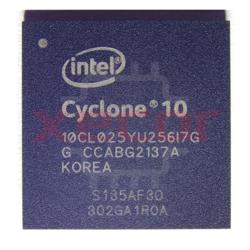
256UBGA IC FPGA with 150 I/o
Power Sequencer LM3881MM/NOPB: Supervisory Circuits
Rectangular 6 pin surface mount device for temperature sensing
NOR Flash EW-SERIES FLASH NOR SLC 8MX16 TSOP Parallel NOR Flash Embedded Memory MT28EW128ABA
On September 23, 2024, China witnessed a significant breakthrough in motor technology. STMicroelectronics officially introduced its innovative three-phase motor driver, the PWD5T60, along with the ready-to-use evaluation board EVLPWD-FAN-PUMP.
Machine vision is widely used in industrial fields, covering numerous application scenarios. In manufacturing, tasks executed using machine vision include final inspection of subcomponents and checking parts for potential manufacturing defects.
Wireless communication has been used in industrial applications for many years, initially for basic control of cranes and other mobile equipment. With the adoption of more standardized wireless connectivity technologies in recent decades, control has expanded to a wider range of terminal devices.