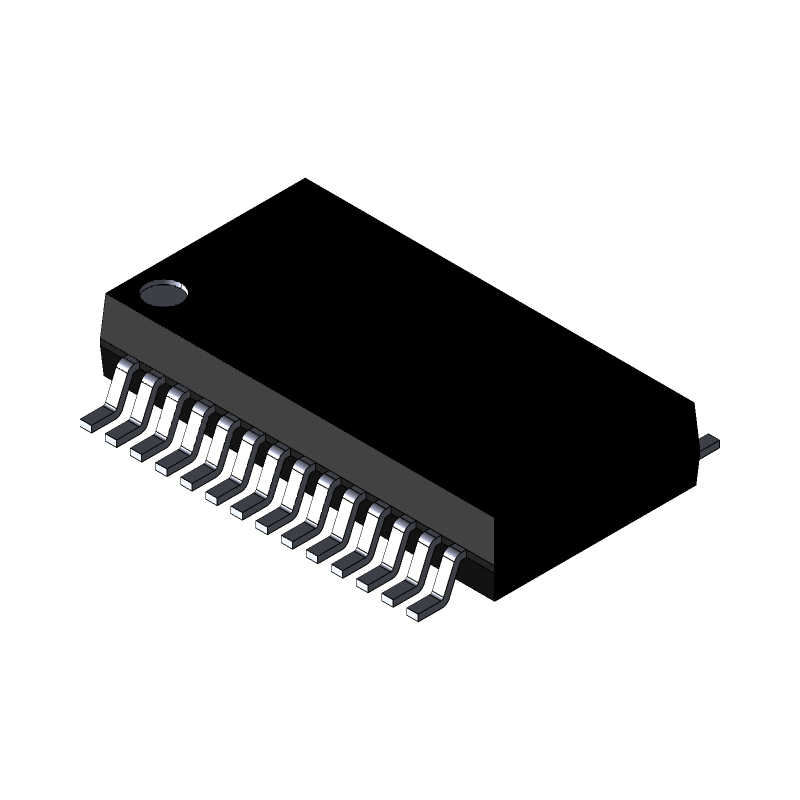
inventory:5,527
International Rectifier
SSOP-28
We are here to provide you with the electronic components you need!
Secure Code for Password Recovery via Email Request.
Please use the security code from your email to reset your password.
Please proceed to log in or return to the homepage.
In modern society, with the pressures of life and work, coupled with unhealthy lifestyle habits, our bodies may inevitably encounter various health issues. As technology advances, we are witnessing the increasing application of multiple instruments and devices in clinical settings to assist medical professionals in treatment. One such device is the high-frequency physiotherapy machine.
Physiotherapy machines, often abbreviated as physiotherapy devices, are designed to apply physical factors to the human body to promote improvement in various conditions. Unlike pharmaceutical treatments, physiotherapy is relatively safe and environmentally friendly. However, unlike medication, physiotherapy can be highly effective for specific medical conditions.
Here's a brief overview of physiotherapy machines:
Classification of Physiotherapy Machines: Physiotherapy machines can be classified based on their principles and therapeutic effects. They include electrotherapy physiotherapy machines, thermal (cold) therapy physiotherapy machines, light therapy physiotherapy machines, magnetic therapy physiotherapy machines, ultrasound physiotherapy machines, and other types.
Electrotherapy Physiotherapy Machines: Among these, electrotherapy physiotherapy machines are categorized based on the frequency of electric pulses. They can be further divided into low-frequency, medium-frequency, and high-frequency electrotherapy methods. Low-frequency electrotherapy has a frequency of less than 1 kHz, medium-frequency electrotherapy has a frequency range of 1 kHz to 100 kHz, typically using frequencies between 2 kHz and 8 kHz, while high-frequency electrotherapy employs alternating currents exceeding 100 kHz. Different frequencies of electrotherapy can help alleviate various types of pain and induce irregular or regular muscle contractions.
In the context of high-frequency physiotherapy machines, power amplifiers play a crucial role in the driving process. A power amplifier is an electronic device capable of increasing the input signal to a higher power level and outputting it to a load. It finds widespread application in medical devices, particularly in high-frequency physiotherapy machines.
Here's how power amplifiers are utilized in the driving of high-frequency physiotherapy machines:

One example of a high-voltage power amplifier is the ATA-4315 high-voltage power amplifier, which is an ideal single-channel high-voltage power amplifier capable of amplifying both AC and DC signals. It can deliver a maximum output voltage of 150Vp-p (±75Vp) and a power of 105Wp, making it suitable for driving high-voltage power loads. This amplifier features digitally adjustable voltage gain and allows users to save common settings for efficient remote instrument operation.
Bandwidth: DC to 3 MHz (-3dB)
Voltage: 150Vp-p (±75Vp)
Current: 1.41A peak
Power: 105W peak
Slew Rate: ≥1000V/μs
Remote Control: Programmable
In conclusion, power amplifiers play a vital role in the operation of high-frequency physiotherapy machines. They increase output power, improve signal quality, enable signal adjustments, and ensure system protection and stability. By selecting and utilizing power amplifiers wisely, the performance of high-frequency physiotherapy machines can be optimized, leading to improved treatment outcomes.
2V and is housed in a 144-pin TQFP package
250kbps full duplex RS232 transceiver TSSOP16 interface IC
4V 2-Pin SOD-323 T/R ESD Suppressor Diode TVS Bi-Directional
This programmable EPROM is a reliable and cost-effective memory solution for various applications
256UBGA IC FPGA with 150 I/o
Power Sequencer LM3881MM/NOPB: Supervisory Circuits
Rectangular 6 pin surface mount device for temperature sensing
NOR Flash EW-SERIES FLASH NOR SLC 8MX16 TSOP Parallel NOR Flash Embedded Memory MT28EW128ABA
In the Zilian smart terminal product series, two Bluetooth gateways serve as ideal solutions for dynamic health management.
Amid a global trend toward an aging population and an increasing burden of chronic diseases, the urgency for new drug development is unprecedented.
A biochemical analyzer is a system that employs various electrochemical and optical techniques to analyze and detect biological samples. This system comprises an optical engine, sample movement/flow control, automated control and processing, power management, and environmental monitoring and control (temperature, pressure, humidity). To enhance efficiency, biochemical analyzers available in the market are highly automated.